
School Lunches
School Lunches (Ordered a week in advance)
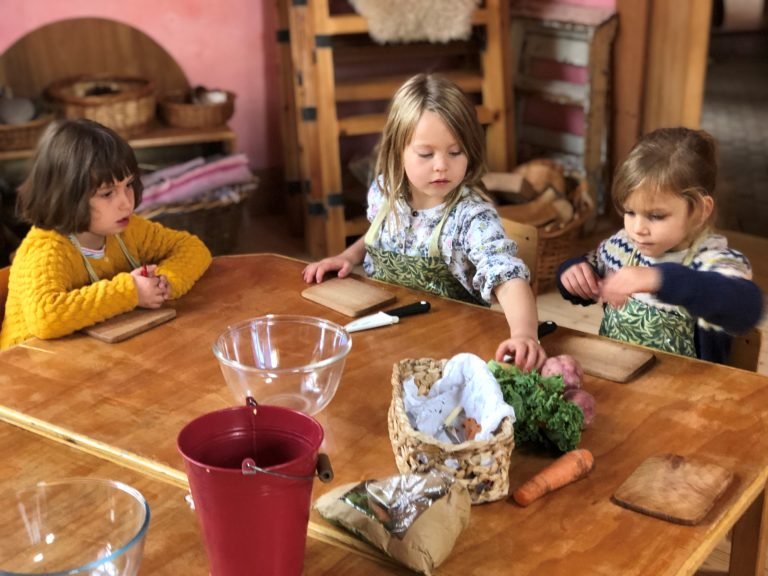
Learning to bake using organic ingredients starts in our Toddler Group and continues through our Kindergarten, Lower School and Upper School. Our school is a rare example of school which emphasises sustainability and the belief in self reliance.
Uniquely, it is the Upper School pupils at the school who prepare the school meals four days a week. Running the school canteen as a business allows pupils to learn about food provenance, as well as teamwork, marketing, budgeting and organisational skills. Pupil involvement helps to emphasise the importance of sourcing quality, local and organic ingredients and is built into the school’s curriculum.
Pupils receive in-depth training at the start of the year to cover food preparation and handling, hygiene, storage and health and safety. Their profits help to fund a cultural trip at the end of their education. A daily main course is offered, including seasonal vegetable soup, pasta, stone-baked organic pizza and baked potatoes. Fresh organic fruit is also offered every day and produce is often sourced from the school garden.
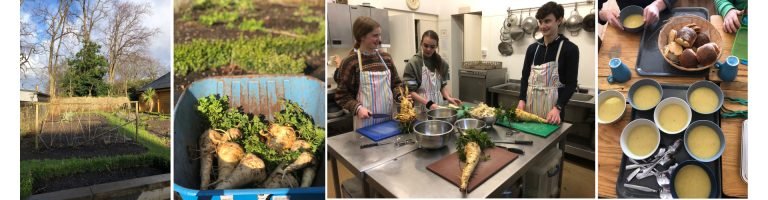
From school plot to soup pot: these gigantic parsnips, grown by pupils in the school vegetable plots as part of their timetabled gardening lesson, along with a selection of winter vegetables from the other 14 campus plots were harvested, prepared, cooked and served by pupils to their peers for school lunch.
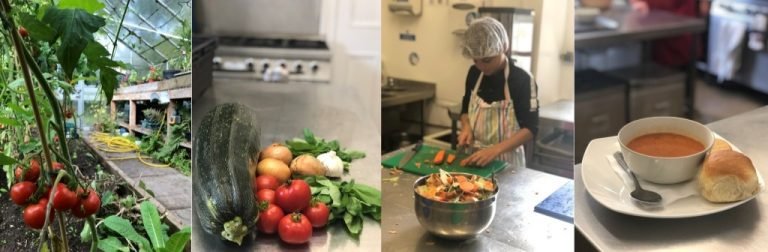
Autumn Basil and Tomato soup from vine to bowl
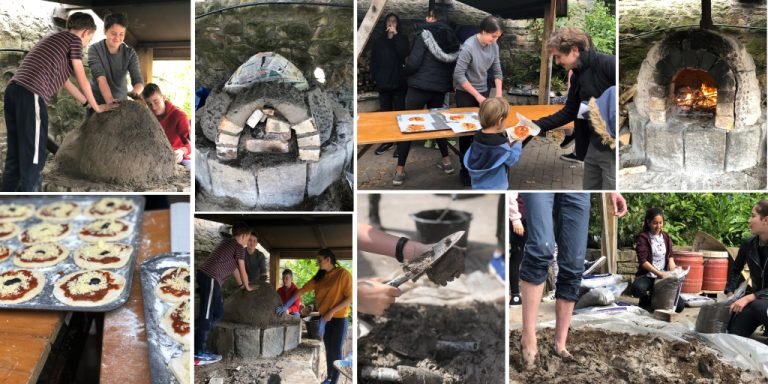
Organic pizzas for Kindergarten families on Thursdays, clay-baked in an oven made by pupils as part of their chemistry Main Lesson, and sold to raise funds for their end of year six-week class exchange with a Steiner Waldorf school in Germany or France.
Gardening and Farming
A respect for the environment is woven into the curriculum at every stage. Lessons in gardening and farming help our pupils learn how their work has a direct and a visible impact on their environment.
We have a dedicated Gardening Teacher and pupils tend their own plots and choose what to plant. They can sell their own organic vegetables to raise class funds or make soup and salads for their class. In Class 9 pupils spend a residential week at Garvald Home Farm near West Linton.
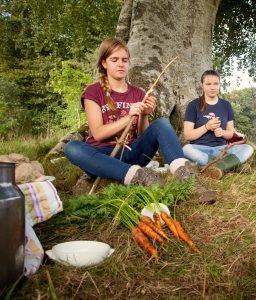
Pupils during their two weeks stay at the local Garvald Biodynamic Farm. Biodynamic agriculture is a form of alternative agriculture very similar to organic farming, but it includes ihigher animal welfare princliples and an attention to soil nutrition. Initially developed in 1924, it was the first of the organic agriculture movements.
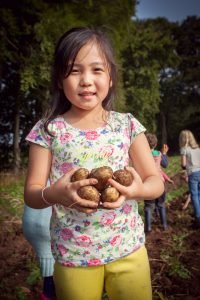
Harvesting potatoes, which are then roasted on a fire for lunch.