Frequently Asked Questions
Does Edinburgh Steiner School have a film about the Waldorf education prospective parents can watch?
Does Edinburgh Steiner School have a film about the Waldorf education prospective parents can watch?
YES!
Over 2020 – 2021 Edinburgh Steiner School created a series of nine short documentaries with award-winning education filmmaker Saskia Anley McCallum. In 2025, we collaborated with Helios Media to provide a fresh insight into school life at ESS.
How do you support pupils with additional support needs?
How do you support pupils with additional support needs?
Edinburgh Steiner School aims to promote and safeguard the wellbeing of all pupils, within the framework of Scottish legislation for education and as an Independent School. The Pupil Support Department is central to this, working with the teachers, parents and professionals as well as the children and young people themselves.
Pupil Support embraces:
- Cognition and learning – including those who are gifted or talented, neurodiverse learning styles and hindrances to learning
- Communication and interaction – including EAL provision
- Social and emotional wellbeing and mental health
- Physical development and hindrances and sensory difficulties
The Department has three Coordinators, each of which has specialised knowledge and experience in a School area – Kindergarten, Lower School and Upper School – as well as specialists in Supportive Eurythmy, English as an Additional Language, experienced tutors in literacy and numeracy and other specialists whenever possible. We provide support either by advising teachers about appropriate approaches or by sessions with individual pupils or small groups.
For Upper School pupils with additional support needs who are taking exam subjects, the School will apply for appropriate ‘Assessment arrangements’ via the exam boards, including the provision of extra time, use of a laptop, a ‘reader’ or ‘scribe’, or separate spaces in which to sit an exam.
Edinburgh Steiner School is nevertheless a selective independent school with a distinctive Steiner Waldorf Curriculum; it is not a school which specialises in Special Educational Needs, although we strive to be inclusive as far as our limited resources allow.
Support for Learning is embedded in the Steiner Waldorf Curriculum, which is regarded by many as being supportive of the different learning styles of the majority of children and young people. Consequently, we have a small ASLD with a limited capacity for individual and classroom support. Although we aim to work within the aims of GIRFEC, as an independent school we are unable to access funding streams or services available through the Local Authority.
Balancing the needs of pupils within a Class or year group is essential to maintain a healthy and diverse learning community with those bound for university studying alongside those who may pursue different non exam based options.
In considering applicants, we aim to balance the interests and aptitude of the pupil with the context of the whole Class group, with the ethos of the Curriculum and School, and with the resources the School has available. If we have the capacity to accept a child or young person with Additional Support for Learning needs, then we will.
See also: Pupil Wellbeing: Child Protection Team, Pupil Support Department
How big are your classes?
How big are your classes?
The Seedlings Playgroup invites up to ten children from aged 2 to around 3.5 years old each day. As of 2021 there are two Seedlings Groups.
In the Kindergarten, mixed-age-group sizes average about 10-12, and sometimes as large as 14.
In the Lower and Upper Schools, our year groups are known as ‘Classes’ and the average Class size is about 18-20. Classes can be as small as 10 or as big as 30, but these extremes are very rare. For a variety of reasons, a Class with 25 children is normally regarded as ‘full’.
In the Middle and Upper Schools, Classes are usually split into smaller groups for many craft, movement and exam lessons. Class sizes in exam subjects in Classes 10-12 will rarely exceed 10 pupils, and the median class size will be closer to 5 or 6.
Do you have school lunches?
Do you have school lunches?

YES!
Lunches from the school's kitchen are freshly prepared five days a week by our chef, Kike. Organic pizzas are made from scratch on Thursdays by Class 8, including a batch in a wood-fired outdoor clay oven.
Lunches are paid for in advance and delivered to pupils in their Classrooms. Lower School pupils eat lunch with their Class Teacher and classmates.
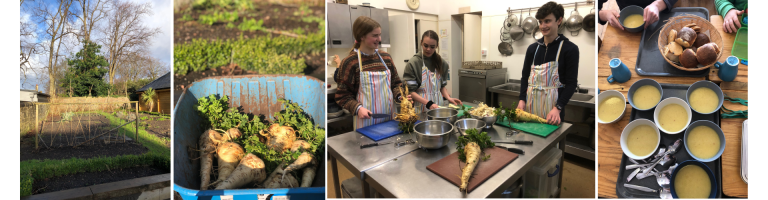
From school plot to soup pot: these gigantic parsnips, grown by pupils in the school vegetable plots as part of their timetabled gardening lesson, along with a selection of winter vegetables from the other 14 campus plots were harvested, prepared, cooked and served by pupils to their peers for school lunch.
Can my child enrol at any time throughout their learning journey?
Can my child enroll at any time throughout their learning journey?
YES!
We accept applications throughout the year to Seedlings, Kindergarten, Lower School Classes 1 – 8 and Upper School Classes 9 – 12.
To learn about the application process and download an application form, follow the button below:
What is a spiritual education?
What is a spiritual education?
A central aim of Steiner education is to develop, harmonise and unite the faculties of thought, feeling and action in the child, so that the foundations may be laid for mental adaptability, initiative and moral strength in adult life. The child is seen to have physical, emotional and spiritual needs as well as intellectual ones. The teaching and curriculum together seek to nourish all these aspects. So, what is the ‘spirit’? It can’t be seen, and it’s almost impossible to measure. Is it inside of us or around us? Is it our personal property, or something we share?
For the staff of Edinburgh Steiner School – one of over a thousand Steiner Waldorf schools worldwide – an appreciation of the spiritual dimension lies at the heart of everything they do. Steiner teachers, who are themselves on a path of learning and maturing, therefore need thorough and thoughtful answers to such questions as ‘what is the spirit?’ and ‘what counts as spiritual?’
Uniquely, Steiner schools have evolved a curriculum which is founded upon – indeed, is wholly informed by – a spiritual understanding of the nature and development of the human being, especially in childhood and adolescence – and in the adult teacher as a ‘reflective practitioner.’ Crucially, this understanding encompasses many of the things we cannot see.
In Steiner Waldorf education, everything revolves around the human being, and the rhythms of the natural world. This is immediately apparent to anyone who visits a Steiner school. There are the gardening lessons, of course, and organic foods and raw wool. But there’s a lot more to ‘nature’ than soil and produce. There’s also ‘human’ nature.
Spend any time in a Steiner school classroom, and you will see teachers telling stories to the children, not reading to them off the page. This practice – this art – draws on the direct oral tradition to forge closer, more emotional bonds between the speaker and the listener. Not only that, but the story itself – its setting, theme or characters – will have been carefully selected to meet the learners in a particular phase of their spiritual development. The precise content of the story, in other words, may be less important than when and how it is told. When this distinctive, ineffable – almost magical – blend is gifted by the teachers, their spirit becomes the source of inspiration. This is no longer transmission—of information or skills from educator to learner—it is transfusion: the giving of the essences of life from one to another.
Why does your school discourage the use of digital technology for younger children?
Why does your school discourage the use of digital technology for younger children?
From the age of 12, we make use of the Cybercivics curriculum to encourage responsible and safe online engagement. From the age of 14, our Digital Literacy curriculum accelerates, to support the development of tools for successful study, further education and employment. Since 2023 we have an immersive 'Main Lesson' block in Digital Citizenship for Class 12 (aged 18). Yet it is incompatible in the younger years with the holistic education we are striving to deliver.
Edinburgh Steiner School believes that electronic devices should be used appropriately. While devices such as projectors and computers are sometimes a useful aid to teaching, and, when introduced at appropriate ages, can have a beneficial impact on learning, we prefer to minimise the use of screens and digital technology in younger age groups.
The use of personal devices in school - by teachers and parents as well as pupils - is also kept to a minimum as far as possible to reduce distraction and to encourage members of the school community to interact in person.
Steiner educators carefully nurture and develop in the pupils the skills required for neat, accurate handwriting and pupils take great pride in the quality of their written work. The School has two libraries, one for younger years and one for senior school readers, and pupils visit these regularly to browse, borrow books and chat with the librarians about their interests. Narrative and storytelling is a strong feature of Steiner Waldorf education, which recognises the power of imagination to foster creativity and personal growth.
Calling for social media and gaming to be excluded from school life, Larry Flanagan, general secretary of the Education Institute of Scotland (EIS) told a conference in Edinburgh:
"Neuroscientists tell us that there is an impact of social media and gaming on the way the brain works…it is creating increasing isolation and increasing stress for a significant number of young people and that alternative reality will have ramifications for society”.
Fellow Steiner school, Waldorf School of the Peninsula, has a comprehensive section of its website dedicated to its Media & Technology Philosophy and film #KidsOnTech (2021). Situated in Silicon Valley, which serves as a global center for high technology, innovation, venture capital, and social media, The New York Times sparked national media coverage with a story on why its parents are turning to Waldorf education. Why?
"About three quarters of the parents work in technology in some way”, says Pierre Laurent, Technology Executive and Board President of WSP. Asked by the BBC about the role of computers in schools, he replies: “Human capacities are not developed in front of a screen. You need to be engaged with making things and doing things yourself”.
Steiner schools do not shy away from engaging in critical debate about the appropriate use of computers, TV and DVD. Since that front page article in 2011, Walorf School of the Peninsula (WSP) has been featured in more than 30 newspaper stories around the world. In addition to news coverage, representatives from WSP were invited and served as panelists for both the 2012 Google Big Tent conference at the Google Mountain View headquarters and the New York Times “Schools for Tomorrow” conference in NYC. They, like the many Steiner Waldorf schools found in some 80 countries including Scotland, find the use of computers incompatible with the holistic and humanly truthful quality of education we are striving to deliver before the Upper School teenage years.
A familiarity with all the technologies that surround us and influence our lives is an essential part of a complete education. In the Upper School curriculum, Steiner Waldorf education embraces technology in ways that enhance the learning process, by using it as a tool, rather than replace the role of the teacher; and pupils quickly master the technology.
Edinburgh Steiner School is situated in a city viewed as a miniature Silicon Valley, with an ambition to become the data capital of Europe. It has a leading tech ecosystem, with an estimated 66,000 people employed in the sector (7% of the workforce). This is larger than the hospitality industry; and many Steiner Waldorf graduates have gone on to successful careers in the tech, film and TV industries. The curriculum is complimented at Edinburgh Steiner School by an after-school Computer Coding Club for Classes 8 – 12. The School’s Digital Literacy Group has the remit of assessing the School’s provision of age-appropriate digital literacy.
Concern regarding the use of technology is not restricted to Steiner schools. Ongoing research continues to suggest that many professionals who work with children are becoming increasingly concerned that TV, smartphones and computer games are associated with an increase in significantly disturbed behaviour among some children; and the pervasive use of computers in the classroom is having a negative impact on key aspects of children’s learning.
The World Health Organisation‘s screen time recommendations (2019) note:
0 – 2 yrs: not recommended.
2 – 5 yrs: no more than 1 hour; less is better
"...health improvement priorities, disease prevention objective: PA-8 recommended limits for screen time’: 2 – 17 yrs outside of school (for nonschool work) for ‘no more than 2 hours a day"
U.S. Department of Health (2020)
"Make bedrooms a TV- and computer/laptop and phone-free zoneset “no screen time” rules to encourage kids to be active"
NHS (2019)
In addition to the comprehensive information provided by WSP (See Media & Technology Philosophy), further articles are linked to in the sidebar (right). The School’s Parent’s Handbook covers the School policy. For Playgroup and Kindergarten children, this is addressed in the Early Years Handbook (see Publications & Policies ).
Brochure published by European Council for Steiner Waldorf Education (ECSWE):
What is anthroposophy?
What is anthroposophy?
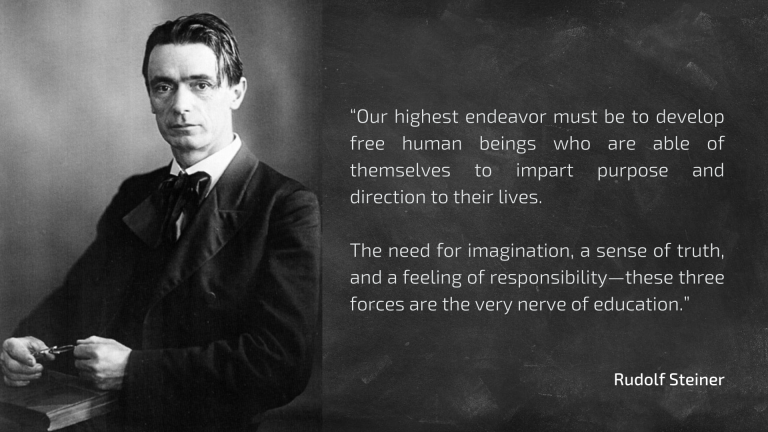
The Steiner Waldorf approach to education is based on Rudolf Steiner’s educational insights, specifically those that relate to child development. These form one aspect of what Steiner called ‘anthroposophy’, literally, ‘human wisdom’, or ‘knowledge of the human being’ .
These ideas are contained in Steiner’s approximately 4,000 lectures and some 50 written works. Many of these can be accessed on line at the Rudolf Steiner archive at www.rsarchive.org.
Anthroposophy is a developing body of research and not a belief system, indeed Steiner was at pains to make sure that people scrutinized his ideas and put them to the test; he did not want them simply to be adopted or ‘believed’, but he did invite people to engage with them. In his lectures on education he gave many indications for suitable subject matter and approaches to teaching for different ages but always stressed that teachers must be free to interpret these indications in their own way.
The philosophy can be applied to the realms of:- Education (1,200 Waldorf Steiner schools and some 2,000 Kindergartens)
- Agriculture (biodynamic / Demeter)
- Architecture (Goetheanum, listed amongst the most significant modern works)
- Medicine (including Weleda, counselling, massage, therapeutic speech, curative eurythmy, psychotherapy)
- Ethical finance (Triodos Bank, The Godparents Anthroposophical Training Fund, The Hermes Trust)
- The Arts
- Special Needs (Camphill, Garvald, Tiphereth)
- Movement (Bothmer and Eurythmy)
- Modern technology (flowforms and water technology, for example).
Steiner schools, including Edinburgh Steiner School, do not teach anthroposophy to the children and young people. Indeed some would argue that it cannot be taught in any conventional sense. We endeavour to work ‘out of anthroposophy’. The implications of this can best be understood by reading the Principles and Aspirations of the European Council for Steiner Waldorf Education, of which SWSF is a member: www.ecswe.org.
These principles are prefaced by the statement:
"Steiner Waldorf educators study and research aspects of anthroposophy in order to inform and develop their work within the schools and places of learning. The philosophical and methodological approaches that underlie anthroposophy are regarded as tools for personal and profession al development; they are not taught within the school, either as a subject or a belief.”
How do you teach music?
How do you teach music?
Music is present throughout the curriculum, as well as featuring in regular drama productions and festivals, from the Early Years to Class 12. Pupils receive dedicated music lessons, while Higher Music is offered as an exam subject. Music is also a vital element of the Main Lesson (singing, rhythm, flute-playing) and all Middle School pupils take part in choirs composed of combined Classes.
As a school, we encourage pupils to take up musical instruments at an appropriate age. A small number of instrumental teachers come to the School and offer private music lessons during school hours.
My child is at a school which follows Curriculum for Excellence, how easily would they fit in to your school?
My child is at a school which follows Curriculum for Excellence, how easily would they fit in to your school?
They should fit in quite easily. The vast majority of new pupils integrate quickly. The underlying intentions of Curriculum for Excellence are closely aligned to many of the principles of Steiner Waldorf education, especially the focus on interdisciplinary learning and project work. New pupils may find they have some knowledge and skills which their Steiner school classmates haven’t yet acquired. But they will also be challenged with new subjects they probably haven’t encountered elsewhere. This isn’t a problem, and new pupils are never pigeon-holed as being ‘ahead’ or ‘behind’—although some pupils may be encouraged to take extra lessons in French or German if they haven’t met these languages before.
What extracurricular activities do you offer?
What extracurricular activities do you offer?
The Steiner curriculum aims to cover a wide range of activities for the pupils throughout each day. However, for pupils who wish to extend their interest beyond school hours a number of opportunities exist, particularly in the realm of sport and physical activity.
These change according to demand and the availability of spaces, but often include Basketball Clubs, Chess, Drama, Musical Theatre groups, Circus & Aerial Arts, Computer Coding, Duke of Edinburgh Award Scheme, Yoga, Bikeability and regular ceilidhs.
The School also has a Student Council, Environmental Action Group, in addition to a choir and orchestra.
The School also celebrates several festivals throughout the year in and out of school hours, including the Lantern Walk, Advent Spiral and Spring and Christmas markets.
Do you offer bursaries and scholarships?
Do you offer bursaries and scholarships?
Bursaries are available on a means-tested basis. We do not currently have a scholarship scheme.
The Board of Trustees allocate 6% of the previous year’s net income to two bursary funds. The main Bursary Fund (5%) is available to help fund up to 60% of fees to qualifying current and new families, applied for year-by-year on a means-tested basis.
An application can be submitted for pupils in Classes 1 – 12, as well as Treetops Kindergarten pupils not in receipt of ELC funding.
Our Seedlings and Kindergarten are longstanding Partner Providers of Early Learning & Childcare (ELC), delivering the Government’s 1,140 Hours of funded learning available to all 3 and 4 year olds (and eligible two year olds)
Additional Reductions in Fees
We offer a Third Child Reduction of 25% on the fees of a third child and any subsequent children providing that all children are attending Edinburgh Steiner School simultaneously.
Our Kindergarten are longstanding Partner Providers of Early Learning & Childcare (ELC), delivering the Government’s 1,140 Hours of funded learning, ELC grant is available to 3 and 4 year olds (and eligible two year olds) residing at an Edinburgh postcode allowing parents to access up to 30 hours funded (free) in our Kindergartens.
We are also registered with the Tax-Free Childcare Scheme, reducing eligible fees by 20% for pupils under twelve years old.
Do you teach all the science subjects at exam level?
Do you teach all the science subjects at exam level?
Yes. Chemistry, Physics and Biology are all offered as an exam subject option every year at National 5 and SQA Higher level. Chemistry is offered at Advanced Higher level (2027/28)
Is your school regulated by Education Scotland?
Is your school regulated by Education Scotland?
Yes. As an independent school we are inspected by Education Scotland on a regular basis. Between inspections, the School maintains a link with Education Scotland through our ‘link inspector’ who visits on a semi-formal basis once or twice a year to offer advice and guidance.
Where can I read news about the School?
The School has a weekly ezine, the Tuesday Notice, providing an insight into life on campus. Subscribe to get this emailed directly to your inbox.
Alternatively,
What do your pupils do after leaving school?
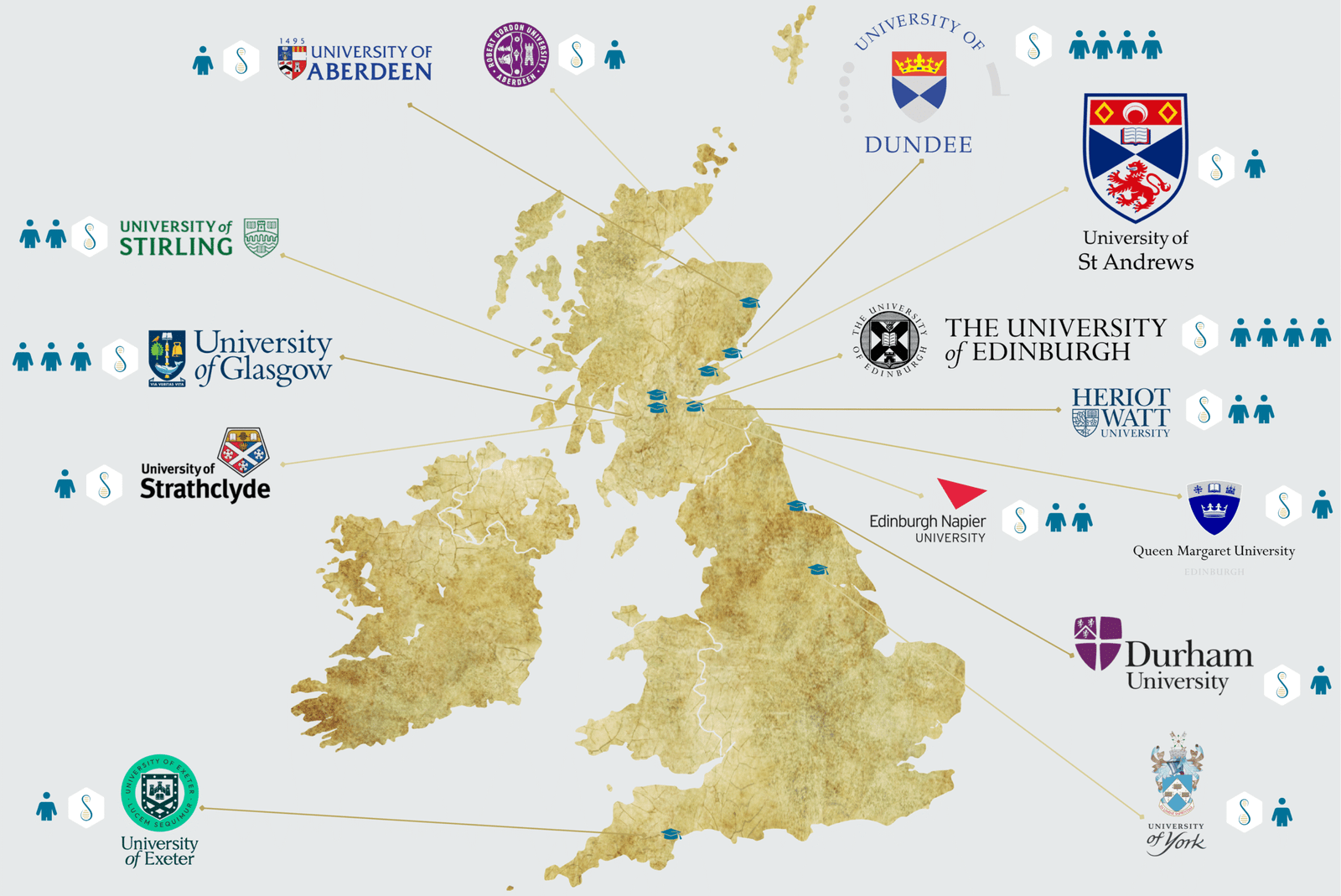
When pupils leave Edinburgh Steiner School, the vast majority pursue further or higher education. Scottish Universities (Edinburgh, Glasgow, St Andrews) are popular destinations. A high proportion of leavers opt for courses at art schools; engineering and science degrees; and courses in the humanities. A smaller number of former pupils move straight into the world of work.
What makes your education different?
What makes your education different?
Edinburgh Steiner School is part of an international network of over 1000 Steiner Waldorf schools, all of which offer a similar curriculum with a distinctive local element.
No entrance exam
The School is independent, but doesn’t select pupils on the basis of ‘academic ability’.
Start later and finish ahead
Like most of the world, our pupils start formal learning in school at the age of six or seven.
Holistic curriculum?
Another unique feature of Edinburgh Steiner School is the holistic curriculum, which emphasises creative thinking, imagination and interdisciplinary learning. While the principles of Steiner Waldorf education are common to all Steiner schools, each school and individual teacher has the freedom to interpret and develop the curriculum in unique ways. This is because Steiner Waldorf education is rooted in values and intentions: it is not a collection of syllabuses which list specific bullet points of knowledge. It is not utilitarian.
Foster pupils with vision and purpose
While education has a duty to prepare young people for the world, and to help them develop skills and knowledge, we believe our most important purpose is to instil a sense of principled agency: education from our standpoint is rooted in an understanding of what it means to be human; how and why human beings are connected to each other and the natural world, and what it means to be a responsible individual in a wider community. This is what we mean when we describe Steiner education as ‘education towards freedom’: it isn’t about the ‘freedom to do as we please’ but refers to the freedom which comes from resilience, moral courage and self-knowledge—the freedom to know ourselves and be true to ourselves.
A bastion of the Steiner Waldorf approach to teaching in Scotland, the broad curriculum at Edinburgh Steiner School emphasises creative thinking, imagination and interdisciplinary learning. Its cornerstone feature is the Main Lesson Programme, delivering over 100 concentrated topics over a pupil’s twelve-year school career.
While the pedagogical principles are common to all Steiner kindergartens and schools, each school and teacher has the freedom to interpret and develop the curriculum in individual ways. This is because Steiner Waldorf education is rooted in values and intentions: it is not a collection of syllabuses which list specific bullet points of knowledge.
Developing 11 creative thinking skills
Edinburgh Steiner School is the only Centre for the delivery of the Integrated Education Suite of qualifications in the Capital. There is a growing need for creative solutions to meet an ever-increasing array of social, political, economic and natural challenges, from disaffected youth to climate change, and yet there are fewer and fewer opportunities for young people to practise the necessary skillset they will need within the current assessment system.
Employers, universities and global leaders in creativity are calling for the education sector to make an investment of effort now, so that pupils will have the inner tools that they need to meet these modern challenges.
Edinburgh Steiner School is a not-for-profit school, with charitable status based on the advancement of education. It is currently running the Integrated Education Certificate with pupils in Classes 8 upwards. Derived from the international ACTS – Acknowledging Creative Thinking Skills – project, the portfolio-based qualification, now on the Ofqual register, is equivalent to two GCSEs.
ACTS recognises that assessment by exams does not necessarily give an accurate or complete picture of pupils’ achievements and abilities. Feeling stifled by the requirement to force-feed knowledge to stressed and fatigued teenagers, educators from Finland, Norway, Sweden and the UK, including Edinburgh Steiner School, sought a far more inclusive and less invasive form of assessing the pupils’ skills than the standard exam system. Nobel Laureate in Neuroscience, Professor Thomas Sudhof is Patron of ACTS.
What is a ‘Main Lesson’ and why is it such a big part of the timetable?
What is a ‘Main Lesson’ and why is it such a big part of the timetable?
Overview of the Upper School Curriculum
1. Main Lesson Programme
Core Structure: The Main Lessons are a hallmark of the Waldorf approach, delivering immersive, thematic instruction in arts, sciences, humanities, and crafts. Each lesson lasts 3–4 weeks and typically happens each morning, embedding a cohesive theme tailored to the developmental stage of each class.
2. Weekly Subjects
Beyond the Main Lesson blocks, students also engage in weekly curricular elements:
- Performing & Visual Arts: Choir, Orchestra, Woodwork (Class 9), Basketweaving (Class 9), Stained Glass Making (Class 10), Cooking (Class 12)
- Physical Education & Health: Gym and sports/games/gymnastics (Classes 9–11). Lunchtime and after-school clubs (e.g., basketball for Class 12)
- Wellbeing & Advisory: PHSE (Personal, Social, Health & Economic education) – one period per week. Religious Studies – one period per week (Class 9).
- Guidance & Life Skills: Work Experience – a two-week placement (Class 10). Careers Guidance & UCAS application support (Classes 11 & 12)
- ICT Integration: Incorporated where relevant into lessons—e.g., essay writing in English, electronics lessons in Class 11
3. Exam Diet
- Edinburgh Steiner School integrates both national exams and portfolio-based qualifications with its Main Lesson structure.
- Students take National Qualifications at various levels.
- National 4 & 5 (typically portfolio and exam).
- Highers (two-year, exam-focused courses in Year 12 for students who achieve National 5 success).
- Advanced Highers in subjects like English, Chemistry, Mathematics, German, Art & Design, etc.
- Integrative Education Certificate: A portfolio-based qualification equivalent to two GCSEs, integrated into the curriculum alongside exam subjects.
- Even students who specialize in particular areas for national exams still benefit from the broad Main Lesson exposure across disciplines.
Is Edinburgh Steiner School a ‘faith’ school?
Is Edinburgh Steiner School a ‘faith’ school?
No. Edinburgh Steiner School is non-denominational and welcomes pupils and parents of all faiths and none. While many of the Christian festivals are celebrated throughout the year—something which reflects the broadly Christian demographic of Scotland—Steiner/Waldorf education is not connected to any specific religion, and other religious festivals, such as Diwali, are also celebrated within the school.
Anthroposophy, the philosophy which informs Steiner/Waldorf education, is a set of ideas which is ‘spiritual’ in nature: seeking an approach which is non-material and universal, as opposed to sets of ideals which might be exclusive or dogmatic. In Steiner/Waldorf schools, including our own, anthroposophy is not taught to the pupils.
How many pupils attend the school?
How many pupils attend the school?
The co-educational school has up to 380 pupils from the age of 2 – 18 years old.
EARLY YEARS
- Kindergartens group size of between 13 – 16 children of mixed ages (between 2.5 – 5.5 years old). Treetops Kindergarten is for up to 24 children aged 4.5 - 6 years old. Seedlings Kindergarten for the youngest 2-year-olds, beginning in 2026, is a group of up to ten children.
SCHOOL
The School has a Class per age group, of up to 25 pupils per class. Class sizes typically range from 16 – 25, with the average at around 18 pupils of mixed sexes. Our Early Years groups, Class 1 and large Classes (of between 20 – 25 pupils) each have a qualified assistant supporting the main Class Teacher.
- Lower School is from Class 1 (age 6 – 7) to Class 8 (13 – 14 years old).
- Upper School is made up of Classes 9 – 12.
Visiting students aged 16 and above join the Upper School for a term or more, often staying with a host family.
We have six Toddler groups, and two Baby Group for parents, carers, nannies and grandparents to join with children from birth.
We also have adult pupils, taking the Edinburgh Steiner Education Course.
Are your teachers fully qualified and how are they trained?
Are your teachers fully qualified and how are they trained?
All the teachers at Edinburgh Steiner School are registered with the General Teaching Council of Scotland. The majority of our teachers have a specialised training in Steiner Waldorf education, and the School runs a part-time in-house Edinburgh Steiner Education Course. A significant number of our teachers also hold a mainstream Postgraduate Certificate of Education (PGCE), and some hold Masters degrees (including in Education) and Doctorates.
Is ESS part of the Tax Free Childcare Scheme?
Is ESS part of the Tax Free Childcare Scheme?
Edinburgh Steiner School is a registered childcare provider with the Tax Free Childcare scheme.
Fees for Seedlings, as well as After Kindy / School Clubs and the School’s Extra Curricular Clubs can be paid through a Tax-Free Childcare account if a child is aged eleven and under. (They stop being eligible on 1 September after their 11th birthday). This UK Government scheme reduces the cost of childcare delivered by a registered provider by 20%.
To check your eligibility and set up the government account, visit: Tax-Free Childcare on the UK Government website.
Do you have set dates for new pupil applications?
Do you have set dates for new pupil applications?
No. Applications are welcome at any time during the year, including holiday time.
APPLICATION
When an application form is received for pupils of the age for Lower School and Upper School, a decision will be made as to whether a place is available.
School OPEN TOUR
Prospective pupils and parents can visit the school. Our ‘in action’ Open Tours run one Friday each month during term time. Book
Application Process & Decision
To learn more about the application process, view Admissions Overview.
Admission to Classes 1-12 is by interview with the Head of School or Education Manager and might include the Class Teacher for admission to the Lower School or Class Guardian for admission to the Upper School. Where it is deemed helpful to the application process, a member of the Pupil Support Department will attend.
Perhaps of further interest:
Can my child enrol at any time throughout their learning journey?
Your school is sometimes described as ‘alternative’ or ‘progressive’. How different is it?
Your school is sometimes described as ‘alternative’ or ‘progressive’. How different is it?
This is a matter of opinion, and perspective. There are significant differences in aspects such as timetabling—with the broad-based Main Lesson programme continuing all the way through to Class 12. And there are subjects taught at our school which aren’t taught elsewhere, such as eurythmy and stained glass-making. However, our mission is no different to any other School: through education, we support young people to become happy, healthy and resilient; equipped to meet the world as confident, responsible individuals.
However, our school is noticeably different in the way we emphasise age-appropriate learning; in the continuity of our pastoral care structure, and in our stipulation of clear rhythms. This distinctiveness is partly a function of our ethos, which recognises and elevates the spiritual dimension of the human being. Some people would call this ‘progressive’ or ‘alterative’—largely because it isn’t recognised as ‘mainstream,’ but for Steiner/Waldorf teachers, it’s simply ‘education.’
What do you mean when you talk about education for the ‘hand, heart and head’?
What do you mean when you talk about education for the ‘hand, heart and head’?
‘Hand, heart and head’ is an expression of our desire to deliver a truly holistic curriculum. Whereas mainstream curricula tend to progress in a linear fashion, with one topic explicitly laying the groundwork for the next, the Steiner curriculum is more usually imagined as a spiral. A subject like chemistry might not be taught as ‘chemistry,’ per se. Instead, the subject’s foundations will be established for younger children through ‘experiential learning’: they will explore chemical processes with their senses (the ‘hand’) and emotions, via experiments and stories (the ‘heart’)—but without any explicit mention of chemistry or any of the abstract theory. The theory will emerge later—perhaps many years later—on another arm of the spiral, when a child is mature enough to comprehend it (the ‘head’). This later work integrates ‘feeling’ with ‘thinking’.
When the curriculum inspires a young person, they will be aware, unconsciously, that what they are being taught is right for them, and they will be interested in it; ultimately, they should be motivated to learn purely for the joy of learning, as opposed to reluctantly cramming their heads in pursuit of a meaningless target. This is what we call ‘education towards freedom’.
How do you deal with bullying?
How do you deal with bullying?
The School does not condone bullying under any circumstances, be it physical or psychological. Any report of an incident of bullying, whether from a child, a concerned parent/carer or a member of staff, will be taken seriously.
All teachers have a responsibility to investigate every reported incident and the School has a pastoral and pupil support structure which ensures all reports are followed through. Where issues of social inclusion are identified, teachers work with pupils to develop solutions through empathy and compassion.
In a small school, with a close-knit community, positive relationships are very important. We therefore encourage strong connections via peer to peer support. For example, each pupil in Class 1 has a ‘buddy’ in Class 12.
Pupil Wellbeing
As a school, we have a responsibility to support all areas of our pupil’s wellbeing – safety, physical and mental health, achievement, nurture, physical activity, respect, responsibility and inclusion (no one area being more, or less, important than the others). Steiner Schools have a good reputation for caring for the whole child and helping them realise their own unique potential.
To learn more about the School’s Social Inclusion Group, Child Protection Team and Pupil Support Department, as well as our Wellbeing Reporter forms and Eyes & Ears boxes on campus for pupils, parents and teachers, visit Pupil Wellbeing.
Why does your education seem to emphasise arts and crafts?
Why does your education seem to emphasise arts and crafts?
Steiner Waldorf education is often described as ‘artistic,’ in the sense that we believe education itself is an art form. However, in this context, ‘art’ refers not so much to ‘painting and drawing,’ but to an activity which expresses and applies creative skill and imagination, with the focus always on the human experience. As far as possible, every subject is taught in an ‘artistic’ way, even scientific subjects like physics.
The result is a curriculum which doesn’t separate, for example, handwork from language teaching, or clay-modelling from biology, or music from maths. Creative and imaginative activities which use the full range of learning styles, and engage the whole body, are a vital element of learning in any subject, and at all levels.
What is eurythmy?
What is eurythmy?
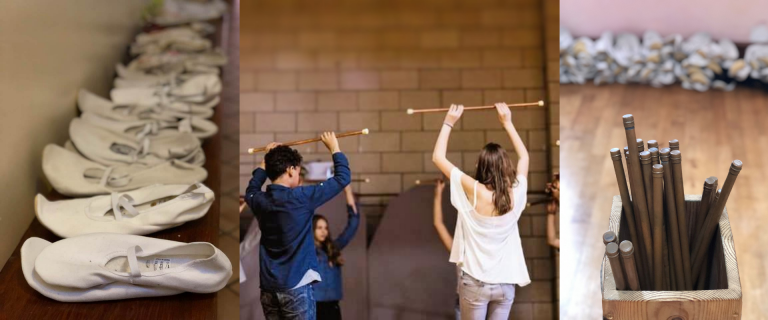
Eurythmy is an expressive movement art originated by Rudolf Steiner in conjunction with Marie von Sivers in the early 20th century. Primarily a performance art, it is taught as part of the timetable in the Kindergarten, Lower School and early years of the Upper School. Eurythmy inculcates a sense of form, spatial awareness, rhythm and teamwork. It is also offered to individual pupils therapeutically.
How do you support pupils with careers education, work experience and UCAS?
How do you support pupils with careers education, work experience and UCAS?
The School has seen extensive development of the Careers Department in recent years. As part of our holistic education, the application of skills learned in school to real-life contexts is embedded throughout the curriculum. Two weeks of work experience is supported in Class 10.
Pupils also receive targeted support all the way through the Upper School in taking their next steps forwards, including via UCAS. We enjoy an excellent record of successful applications to university and college, and view as one of the markers of success the diversity of routes which our pupils choose to pursue when they have left school.
Visit: Exam Results & Destinations
What is the gender balance of pupils in the school?
What is the gender balance of pupils in the school?
Overall, in recent years, the School has had more girls than boys, while a number of children and young people identify as non-binary or transgender. In most Classes there is a roughly even mix of genders, but some Classes may have significantly more girls than boys or, vice versa.
What are the start and finish times on a normal school day?
What are the start and finish times on a normal school day?
School begins at 8:40am for all children. Children can be dropped off from 8.20am
Pupils in Class 1 finish school at 1:00pm each day, apart from one day per week when they finish at 3:15pm.
In Classes 2, pupils finish school at 1:00pm each day, apart from two day per week when they finish at 3:15pm.
Class 3 finish school at 1:00pm on two days and three day per week they finish at 3:15pm.
Class 4 finish school at 3:15pm each day, apart from Friday, when they finish at 3:15pm.
Class 5 finish at 3:15pm each day.
For curriculum and staffing reasons, lessons in the Middle School (Classes 6, 7 and 8) may finish at 3:15pm on some days and 4:00pm on others. Upper School lessons can finish at either at 3:15pm or 4:00pm, but pupils may occasionally have a lesson until later.
After School Club is provided until 5.30pm every term time Monday – Friday. Extra Curricular Activities are offered as well during and after the end of the school day.
Kindergarten begin at 8.35am – 12.45pm / 3.00pm.
After Kindy Club is provided 3.00pm - 5.30pm every term time Monday – Friday for 2 - 6 Year Olds.
Do you organise trips and outings?
Do you organise trips and outings?
Outings are a vital part of our education: from short, local trips into nature in the Early Years, to cultural excursions, museum and farm visits, and extended residential trips to national and international destinations for older pupils. Outings are about experiences, and each experience—which might involve practical, experimental or project work – is carefully planned to fit with a particular stage of the Steiner curriculum.
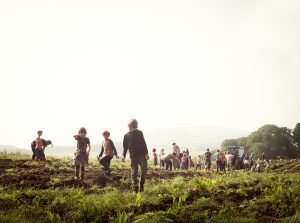
For example, pupils in Class 3 visit a local biodynamic farm on several one-day trips throughout the year to harvest potato, onion and carrot crops and milk two dairy cows as part of their Farming Main Lesson. In Class 9, pupils return for up to two weeks to wild camp and help sow crops and experience life on a working Demeter organic farm.
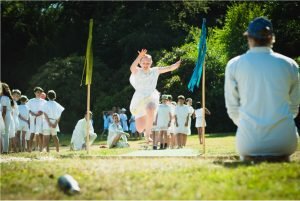
Class 5 study Ancient Greece as part of their Main Lesson programme, and attend a Waldorf Olympic Games along with other Class 5’s from across the British Isles. Over four days in June they camp out in the grounds of another school, live and eat like ancient Greeks and compete together in events such as wrestling and running.
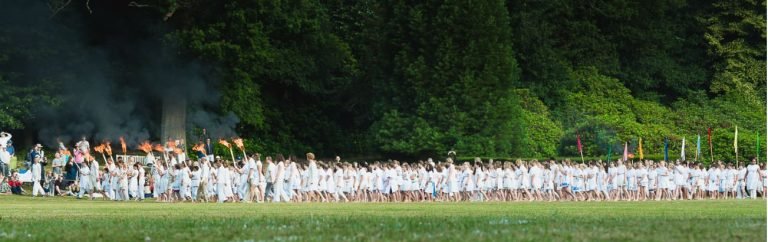
Steiner Waldorf pupils from across the UK – and sometimes abroad from one of the 80 countries where there are Waldorf schools established – come together for the Class 5 Olympics.
Class 6 Visit Hadrian’s Wall as part of a 2 or 3 days ‘outward bound’ school trip.
In Class 8, pupils take part in a 4 – 6 weeks exchange with a German or French speaking class in a sister Waldorf school.
Class 10 embark on two weeks work experience, as well as taking various excursions connected to their Main Lesson Programme.
Another example might be Class 11’s Main Lesson in Surveying. To complete this course, the whole Class spend 5 days in the Highlands collecting accurate data using theodolites and measuring tapes to create a scale map of an area of the Cairngorms.
Class 12 round off their school career with a cultural trip to an international destination, such as Greece or Malta, for one to two weeks in July.
Every Class will have at least one outing each year.

Class 4 pupils explore historic parts of Edinburgh as part of their Local Geography Main Lesson. Photo by former pupil Jacob Murray.
Pupils at Edinburgh Steiner School start formal learning at age 6 or 7. Why?
Pupils at Edinburgh Steiner School start formal learning at age 6 or 7. Why?
Where can I look at a school prospectus?
The ages and Class structure works different to the mainstream state school P1 – P7 / S1 – S4. What Class would my child be going into?
The ages and Class structure works different to the mainstream state school P1 – P7 / S1 – S4. What Class would my child be going into?
The below guideline is based on a child turning the age noted by the June of that academic year. This structure is not a rigid system. Age-appropriate learning is at the centre of the Steiner Waldorf curriculum, and it is not unknown for a child to be better served by going into the class above or below the one noted here. This is discussed as part of the application process.
| Early Years | Age | Equivalent |
|---|---|---|
| Seedlings | 2 years old | Nursery |
| Kindergarten | 2.5 – 5.5 years old | Nursery – P1 |
| Treetops Kindergarten | 4.5 – 6 years old | Nursery – P2 |
*Children become eligible to join Kindergarten at age 3.5 years old, where they attend at least five mornings a week; however there is the flexibility to remain in Seedlings if it is in the child’s best interest to stay longer in a younger setting, where the minimum number of two mornings are attended.
** In Scotland, children born in August to February become eligible for primary school at age 4. A parent has the legal right to Defer entry to P1, giving their child a further year in an early years setting, starting school after their fifth birthday. This means pupils start P1 between the ages of 4.5 and 5.5.
| Lower School | Age | Equivalent |
|---|---|---|
| Class 1 | 6 – 7 years old | P2 / P3 |
| Class 2 | 7 – 8 years old | P3 / P4 |
| Class 3 | 8 – 9 years old | P4 / P5 |
| Class 4 | 9 – 10 years old | P5 / P6 |
| Class 5 | 10 – 11 years old | P6 / P7 |
| Class 6 | 11 – 12 years old | P7 / S1 |
| Class 7 | 12 – 13 years old | S1 / S2 |
| Class 8 | 13 – 14 years old | S2 / S3 |
| Upper School | Age | Equivalent |
|---|---|---|
| Class 9 | 14 – 15 years old | S3 / S4 |
| Class 10 | 15 – 16 years old | S4 / S5 |
| Class 11 | 16 – 17 years old | S5 / S6 |
| Class 12 | 17 – 18 years old | S6 |
For all Admissions enquiries, please contact: admissions@edinburghsteinerschool.org.uk
Does your school support deferred entry to school?
Does your school support deferred entry to school?
Scotland is an outlier regarding starting school age, with only 12% of the nations worldwide starting school before age 6. All but two are former members of the British Empire. Uniquely Edinburgh Steiner School has long run a play-based curriculum in the Early Years, starting formal education in the August after a child’s sixth birthday.
Children born in mid August to February become eligible to begin primary school when they are 4-years-old. Parents living in Scotland have a legal right to defer their child’s P1 place until the August after their 5th birthday. Children born in January and February can automatically defer entry to P1 with another funded year of early learning and childcare, though to do so requires an application to The City of Edinburgh Council by the deadline of 28th March before the start of the new academic year they would be entering school.
Parent(s) with a child born between 15th August – 31st December have the right to give their child a further year in an early years setting also, however eligibility for another funded year of early learning and childcare (ELC) is at the discretion of Edinburgh Council, known as Discretionary Deferral, and requires the written support by the Head of the child’s nursery. For decades, specialist Steiner Kindergarten leaders have helped families with 4-year-olds whose birthdays fall between mid-August – December in this opaque application process, to give the children more time before they begin school.
The campaign Give Them Time was established in 2018 to end this ‘birthday discrimination’. Edinburgh Steiner School shares the drive to bring increased awareness to play being a child’s principal work, advocating a move away from the premature start to school. We are one of an extensive list of official supports of the campaign, which led to the milestone policy change by the Government at the beginning of 2021 to give all children whose parents decide to defer primary school attendance an extra year of free childcare from 2023. Edinburgh Council went further, pledging to honour all Defer Entry to P1 applications from August 2021.
It remains that parents need to submit an application to Defer entry to P1 (with or without ELC funding), and Edinburgh Steiner School actively raises awareness of this legal right to do so. We respect it is the choice of the parent to decide if their child is ready for formal learning.
Some children attending one of our four Kindergartens go on to begin mainstream school once they become eligible. Others remain in a Kindergarten environment for one more year, before beginning P1 after they have celebrated their 5th birthday. Most of our Class 1 children, aged 6 or 7, transition from our Treetops Kindergarten.
What is Edinburgh Steiner School’s position on vaccinations?
What is Edinburgh Steiner School’s position on vaccinations?
How can I submit an application form online?
How can I submit an application form online?
Apply here: Application Forms
Does ESS have a car share programme?
ESS Car Share Programme
Pupils travel from a quarter of a mile to almost 60 miles to get to school and back, coming from almost every Edinburgh postcode and further afield. Enrolled families who are interested in car sharing with another Steiner Waldorf family, and would be happy for the School to link those who live within the same postcode, can make a request to the School to join the programme. Interested postcodes will be added below:
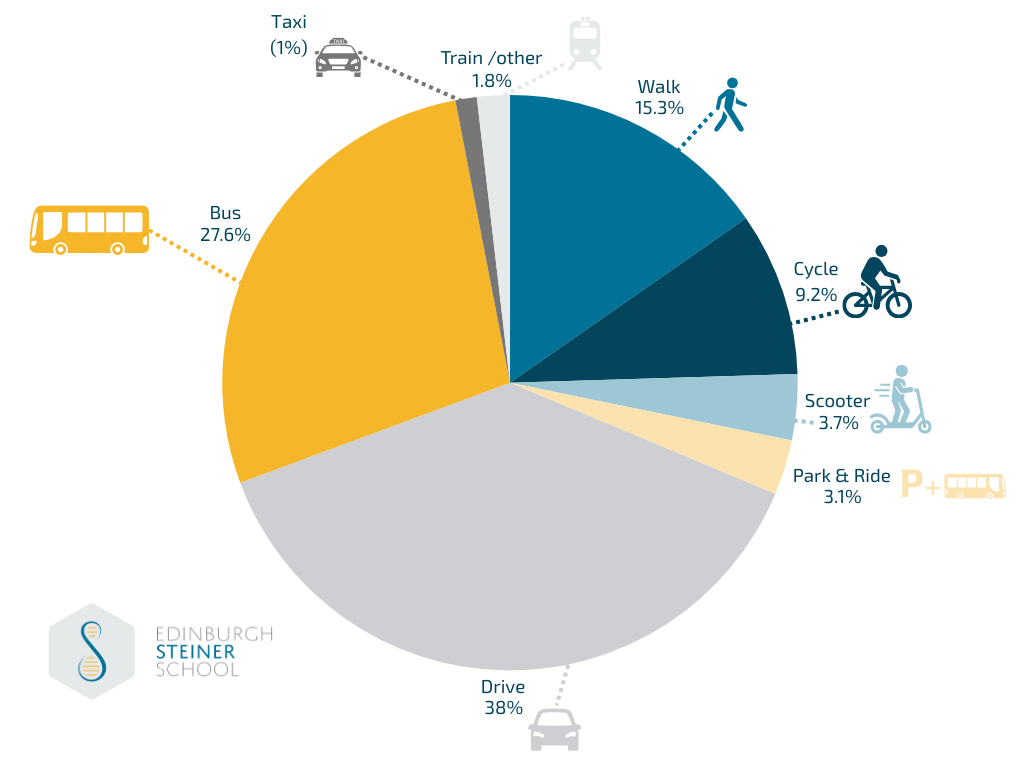
The recent Council Road Safety Survey asked pupils from Class 5 upwards: ‘How do you usually travel to and from school?
Taking into account some pupils take a blend of transport on either/both journeys, over a quarter (25.6%) walk, scooter or cycle; 2-in-5 travel by public transport (bus or train) at leats part of the way. 39.5% go to or from school by car, down over 20% from last year, despite some pupils travelling up to 29 miles each way. Many of the pupils who only travel by car, travel three or more miles to school. The Park & Ride scheme and Car sharing helps to reduce our collective school-run carbon footprint.
Alternative ways to travel to and from school
Public Transport: All pupils are eligible to travel free on Lothian Buses (No 10, 27, 38 and 45 stop very close to the campus; whilst numbers 11, 15, 16 stop in Bruntsfield, which is a short walk away).
Cycle: Our school is also on the National Cycle Network 754 along the Union Canal, a stone’s throw from the School’s back gate. Our School offers Bikeability Levels 1 – 3 as an Extra Curricular Club.
Read on: ‘Sustainable School Run Travel In Spite Of Distances‘
Do you do exams?
Do you do exams?
Yes. The School enters candidates for a wide range of examinations and portfolio qualifications, and results are comparable to other independent schools in Scotland.
The School works with several awarding bodies, including the Scottish Qualifications Authority (SQA), and OCR (examination boards based in England); Cambridge English Language Assessment (for English as an Additional Language, EAL), CEFR (Common European Framework of Reference for Languages) and CFI Awarding (formerly Crosselds Institute for Integrated Education).
‘External exams’ (formal examinations set, marked and graded by awarding bodies outside the School) are taken in Classes 10, 11 and 12, with a mixture of National Courses (4 & 5) Highers and Advanced Highers and GCSE Art & Design being offered.
This particular mixture arises from the teachers’ opinion of which exam will best fit into the Steiner curriculum and the timetable. To enable the broad curriculum of Main Lesson content to continue throughout the Upper School, exams are normally taken a year later than in some other schools.
Overview: Exam Results (2021 – 2025)
News: Exam Results 2021-2025
A full guide to the exam subjects and qualifications offered by the School is available to view under Publications & Policies titled:Qualifications, Exams and Careers Handbook.
Why sit Advanced Highers?
Why sit Advanced Highers?
In recent years the UK, and Scotland in particular, has experienced ‘grade inflation’: more school leavers are applying to universities with a greater number of higher grades. This means that competition for places, especially at the most popular universities, has also increased. Some universities (such as Glasgow) are asking for one or more Advanced Highers in addition to 4 or 5 good Higher grades before considering an application for some popular courses. Having Advanced Highers will improve a learner’s chances of getting onto the course they want to take at the university of their choice.
Edinburgh Steiner School offers Advanced Higher Art, and will offer Advanced Higher English and Maths from session 2026/2027 and Advanced Higher Chemistry from session 2027/2028.







Is Edinburgh Steiner School on social media?
Edinburgh Steiner School can be found on the following social media platforms:
Exhibitions, theatrical productions and documentary films hosted by Edinburgh Steiner School:
ESSTalks.org